
I did a little scrambling over some small hills and rocks yesterday — going off-trail and traversing the opposite side of the outcroppings I perused last week while at the Tule Springs Fossil Beds National Monument.
Now and then when it was too tempting to resist, instead of remaining linear, I’d venture over yet more hills and rocks to detour into the farther reaches to see what there was, and of course, there was more scrubland and outcroppings — a scattered labyrinth of the large formations.
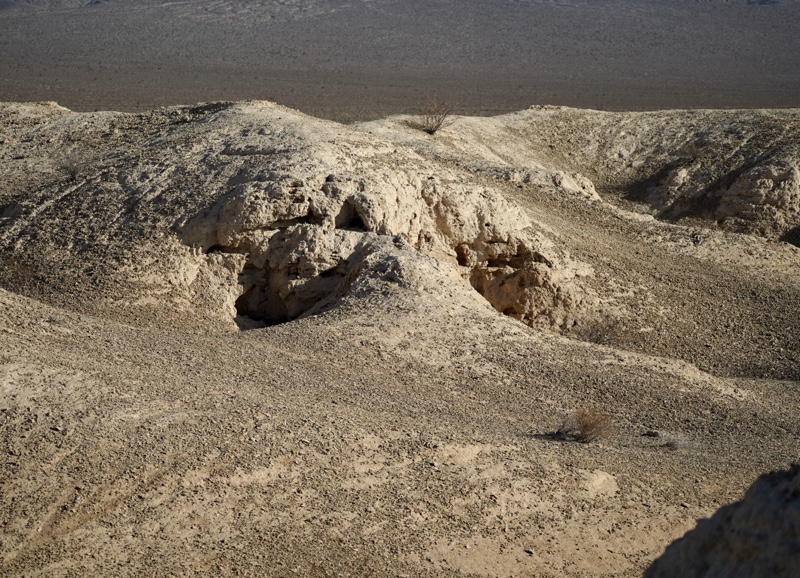
These sculpted masses are replete with crevices, holes and indentations, seemingly offering many places for desert wildlife to hide or nest. They are basically compacted sandy terrain and deposit soils, and though they appear solid, they crumble at the touch, making them unfit for larger creatures, I would surmise.
Some of them seemed to have faces or appeared to have personalities; I snapped images of the ones I thought were particularly photo-worthy.
Often, when turning a corner or descending a hill during my walk, I’d half anticipate an ambush from a snarling mountain lion — an irrational fear from being over-conditioned by city dwelling and upbringing, I suppose, exacerbated by recent headlines of mountain lion sightings and encounters.
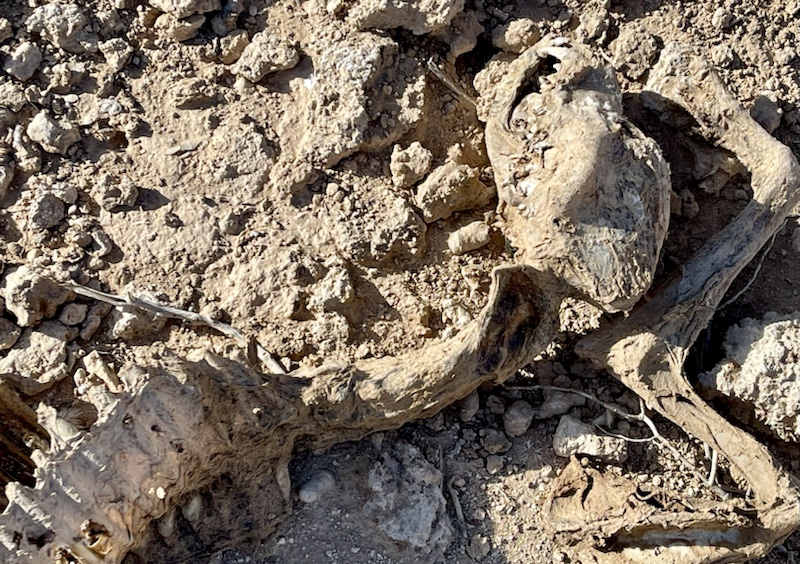
Maybe I was a bit harrowed after stumbling across an animal skeleton at one spot. The bones appeared as dry as dead wood and were picked clean by scavengers. The skull was the most striking part of the remains, and the teeth were still intact. After doing a bit of research, I ruled out the possibility of it being a coyote, as they have longer canines and their jaws are more narrow. This skull looked more pit bull-like.
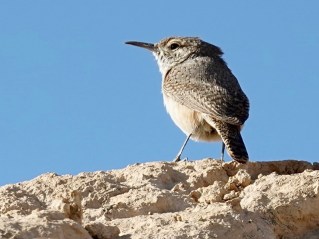
I was visited by a rock wren, as well. I enjoyed its company for about 45 seconds before it wandered off out of sight. Not sure why I don’t expect to see birds at this location, but certain ones are drawn to this type of habitat, like the horned larks I encountered last week in the creosote bush.
 the prickly pressed