
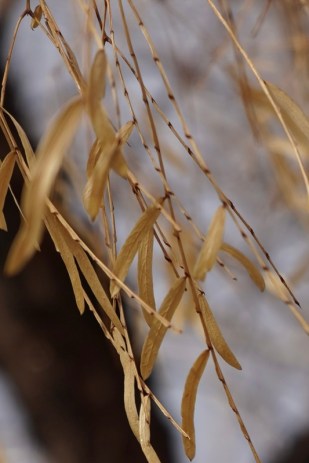
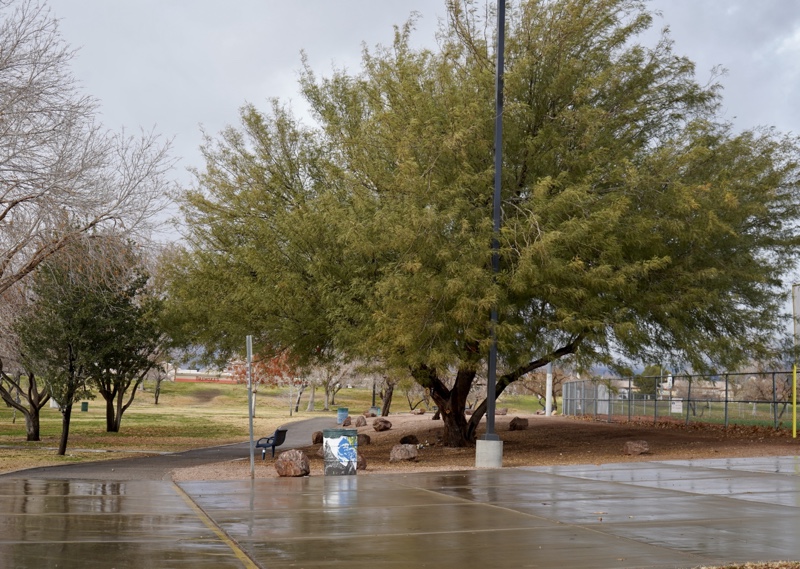
I’ve been going to my local park to check on the honey mesquite trees. I was there on Jan.3 and returned again today. Would you believe a few of them still have most of their leaves, despite being deciduous?
There’s about three of them near the dog park section that still have a full head of hair. These are larger, more mature ones, compared with the smaller ones approx. 50 yards away that, as of today, are about 98 percent barren.
Possibly, aside from being more established, the larger ones could also have better sun exposure.
I had intended to go to my local library today to research it, but it was closed due to the holiday. I stopped into my local bookstore and looked through the National Audubon Society’s Trees of North America for some clues.
The thing that puzzles me here is that most other deciduous trees have finished shedding their leaves. For instance, all the deciduous trees at Floyd Lamb Park at Tule Springs are bare. I also wonder, are the mesquites that are so late in dropping their leaves at my local park also going to be among the last to have new growth come springtime?
Anyway, the Audubon book had a few words to say about autumn. Apparently, there are several factors at play, not just simply the time of year:
“A severe drought can delay the arrival of fall colors by a few weeks. A warm period with lots of rain will make the colors less vibrant. Severe frost can kill the leaves, turning them brown and causing them to drop early.”
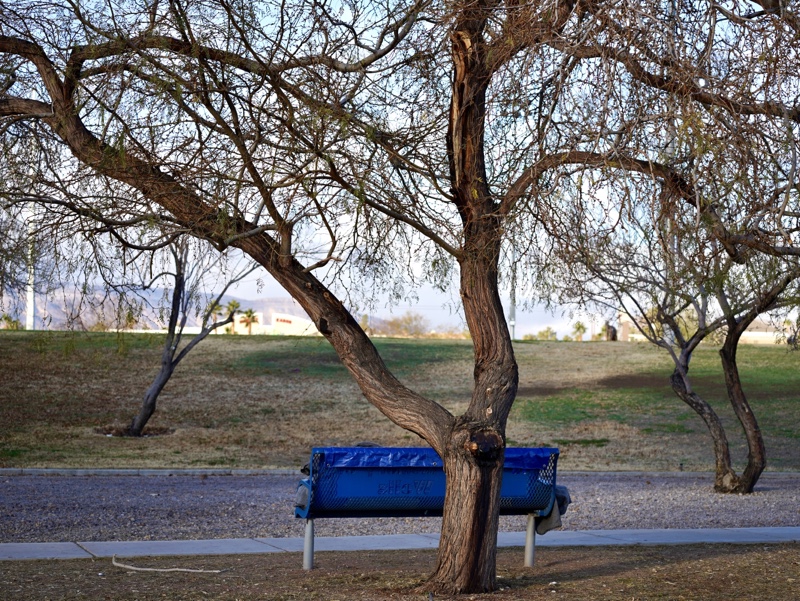
Like I said, maybe the mature mesquites have better sun exposure, which, the Audubon guide indicates, helps them create chlorophyll for longer into the colder season, keeping the green alive in the leaves.
 the prickly pressed